
Connecting research and industry practice to address emerging child safety risks
Independent researchers can bring fresh evidence and perspectives to the work trust and safety teams do every day to address online child sexual exploitation and abuse (OCSEA). When researchers and practitioners work together, they can connect research findings with real-world experience to inform how companies address child safety challenges.
For more than five years, the Tech Coalition Safe Online Research Fund has supported independent research into OCSEA, investing over $3.1 million to date. Our annual convening brings researchers and industry practitioners together to exchange insights, discuss emerging challenges, and identify opportunities for collaboration.
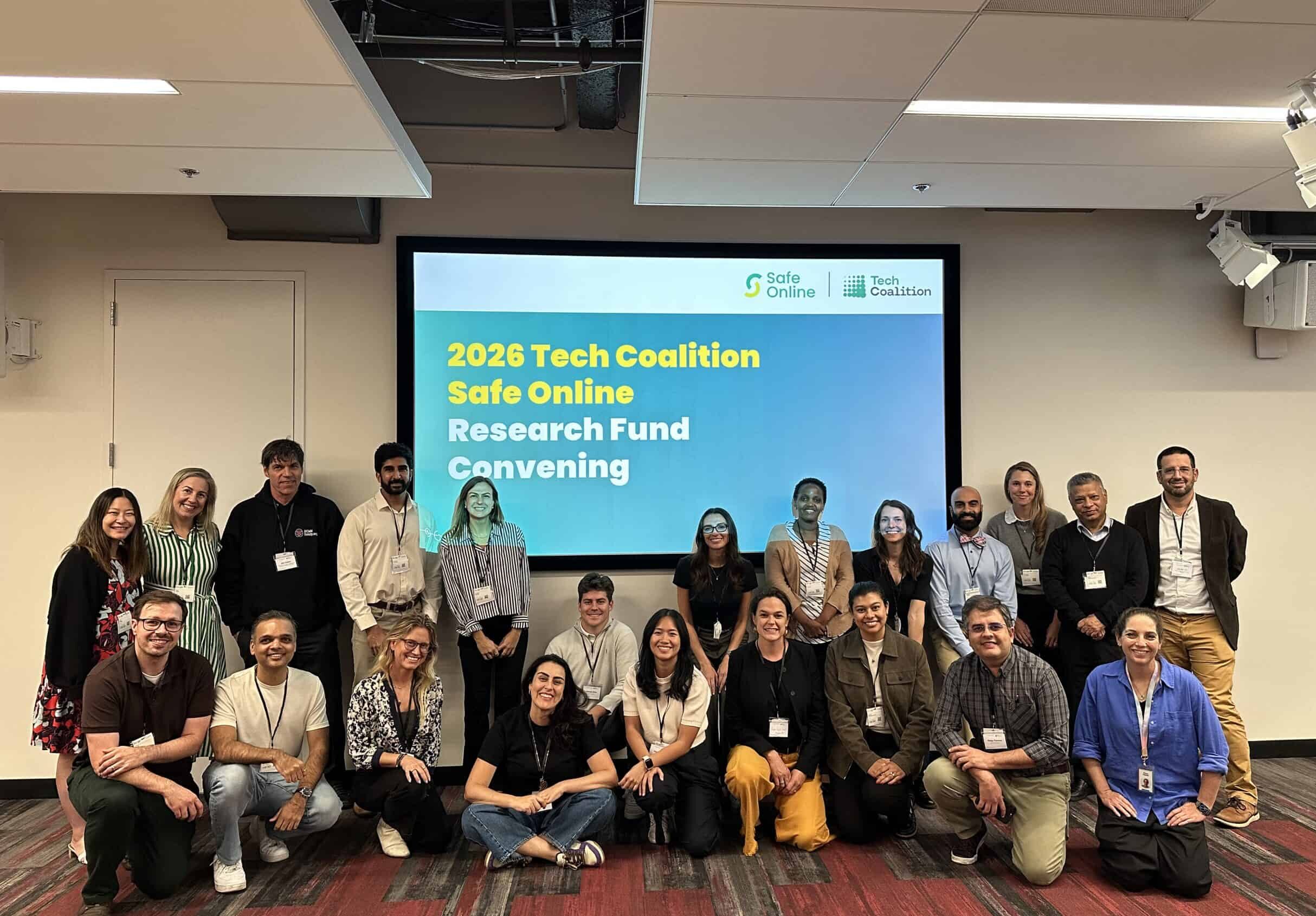
Last week, nearly 30 researchers and member company representatives joined us for our fourth annual convening, hosted by Google alongside the Trust and Safety Research Conference at Stanford University.
Researchers from seven active Fund projects shared their work and explored possible applications with industry teams.
Working on shared questions
Our members helped shape recent funding rounds by identifying priorities for further research, including generative AI, sadistic online exploitation, grooming & gaming, and companion chatbots. At the convening, researchers shared how they are approaching these issues and invited practitioners to contribute their perspectives.
Projects were at different stages of development, creating opportunities for industry engagement. Researchers in early stages shared their methods and sought feedback or potential partners, while those nearing completion discussed preliminary findings and potential applications. For example, practitioners were invited to review Florida Atlantic University’s draft questionnaire on teen chatbot use before it goes into the field, or utilize TU Dublin’s completed N-Light software for conversation data analysis.
Kay Chau, our Vice President of Programs and Member Success, spoke about how industry teams use research to strengthen their child safety practices. Researchers and practitioners also discussed which questions they are best placed to answer independently and where they would benefit from working together.
Exploring the implications of agentic AI
Participants also looked ahead to the child safety questions they may face as technology develops. Melissa Benjamin, Product Manager for Egregious Harm Protections at Google, led a discussion on agentic AI.
Together, participants explored its potential risks and opportunities for online child safety, alongside those of other emerging technologies.
We will carry these discussions into our upcoming Multi-stakeholder Forum on Generative AI. We are drawing on the themes raised to develop guiding questions for the dedicated agentic AI workstream.
Sharing what researchers are learning
Participants wanted more stakeholders beyond the Fund’s research and industry community to know about the research already available and the work still underway.
To help with that, we and Safe Online plan to publish a series of thematic learning briefs based on Fund-supported projects. We previously shared these briefs only with Tech Coalition members. By making them public, we can help more people access independent research on online child safety topics.
Each participant left with a next step, whether reading a full report, following up with a new contact, or exploring a research partnership. We look forward to continuing those conversations with researchers and industry teams.
Thank you to the researchers and member representatives who shared their expertise, to Google for hosting, and to our partners at Safe Online for their continued collaboration.

