

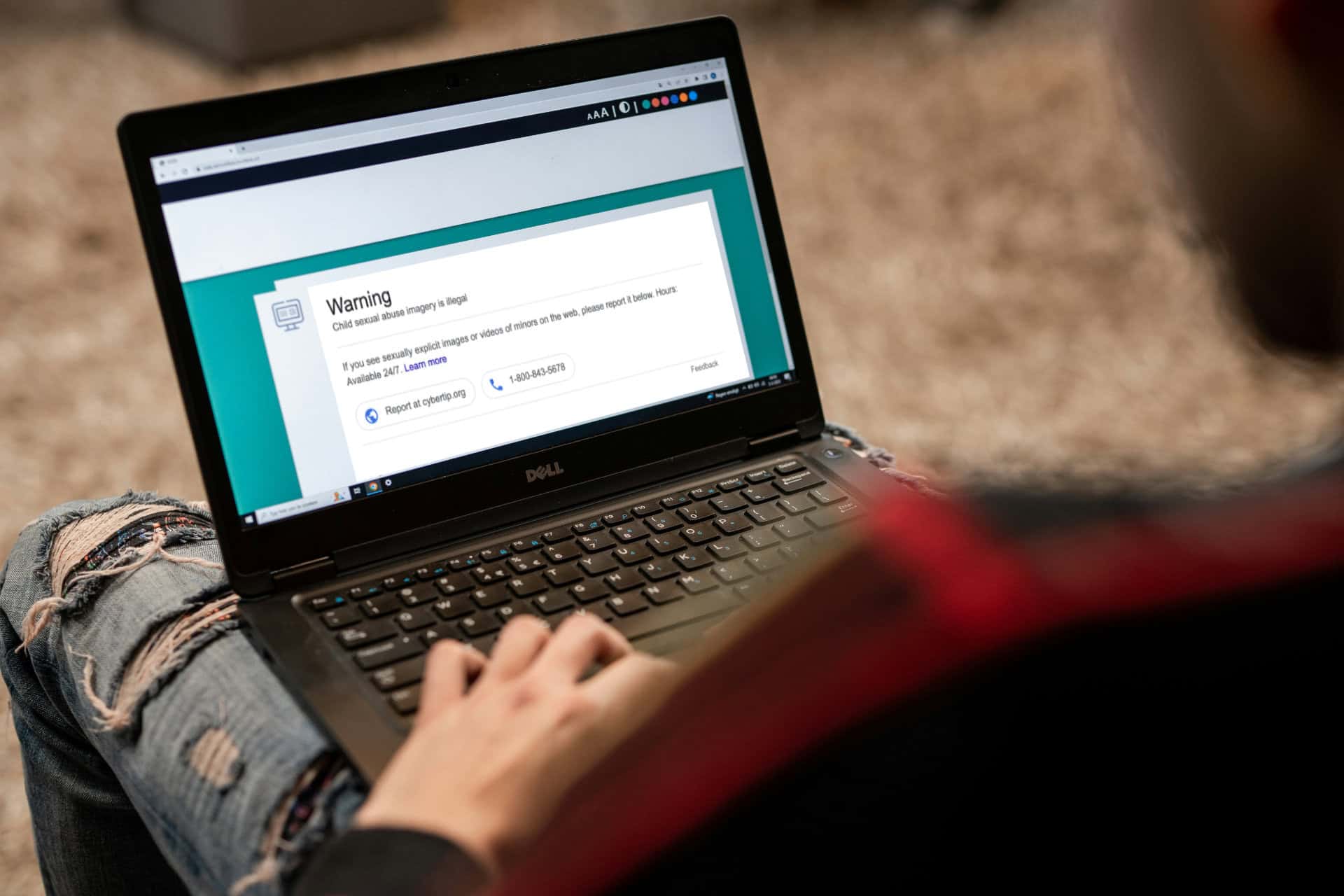
But how do we know which messages work? And what do we want someone to do after reading one?
Those questions deserve careful attention. Someone might stop searching in that moment without taking any steps to change their behavior. Someone else might recognize that they need help but feel too ashamed, or too uncertain about what happens next, to seek it.
For teams designing these interventions, understanding that nuance matters.
Looking again at what researchers have learned
Through the Tech Coalition Safe Online Research Fund, we support independent researchers examining questions like these. Researchers bring expertise and perspectives that help companies test assumptions, understand behavior, and evaluate ways to protect children from online sexual exploitation and abuse.
This is the first article in Opening the vault, a series revisiting research supported through the Fund and considering what practitioners can learn from it today.
We’re starting with our deterrence and help-seeking learning brief. First shared with Tech Coalition member companies in early 2024, it brings together emerging findings from four grantees: Medical School Berlin, the University of Kent, Protect Children, and Universidad de los Andes. The researchers examined different parts of the problem, including motivations for viewing child sexual abuse material, barriers to seeking help, and how perpetrators communicate online.
We’re now sharing the brief more widely so more people can use those findings. It captures the research at an early stage, so readers should treat it as a starting point and explore the researchers’ subsequent publications too.
Start with the behavior you want to change
In the studies summarized in the brief, University of Kent researchers found that participants rated messages about illegality and harm as effective at discouraging further searches for child sexual abuse material and encouraging reporting. However, when asked which messages would encourage someone to seek help, messages addressing psychological distress and a person’s ability to take action were consistently rated more highly.
For me, the practical takeaway is to be specific about the purpose of an intervention. Teams trying to interrupt a search and teams trying to encourage someone to contact a support service may need to make different choices about language and evaluation.
Researchers also found that people’s perceptions of seeking help mattered. Alongside distress and worry, they identified lower perceived stigma and a sense of control over accessing support as factors associated with help-seeking.
That gives teams something concrete to consider when designing a message. Does the reader understand what support is available? Can they see how to access it? Have we explained the next step clearly enough for them to take it?
These findings concern participants’ perceptions of effectiveness, not whether people act on those messages and whether they sustain changes in behavior.
Understand who you are trying to reach
The researchers also challenged assumptions about who views child sexual abuse material and why.
Medical School Berlin researchers identified loneliness and boredom alongside sexual interest in children as factors associated with viewing abusive material. Across the Kent and Berlin studies, men reported higher levels of the behaviors examined, but women also reported engaging in them.
People who abuse children remain responsible for their actions. By understanding the different motivations and circumstances associated with offending, practitioners can design and test interventions that reach a broader range of people.
Protect Children researchers examined barriers and motivations among people accessing child sexual abuse material, including people who had not been convicted. They developed messages emphasizing the possibility of changing behavior and the availability of anonymous, confidential, free online support.
The brief reports more than 110,000 clicks through those campaigns to help resources. That tells us people engaged with the links. We need further evidence to understand how many accessed support and changed their behavior afterward.
Put research into practice, then evaluate it
Since the brief was prepared, University of Kent researcher Dr. Caoilte Ó Ciardha has contributed to Google’s work to update its search deterrence messaging.
Through our Research Fund convenings, Google teams heard about his research and invited him to participate in expert discussions alongside other researchers and helpline representatives. He contributed feedback on wording, tone, and evaluation as the teams developed the messages.
Google subsequently reported greater engagement with the therapeutic support services it featured and a reduction in follow-on searches seeking child sexual abuse material. Safe Online’s account of this collaboration explains how researchers and practitioners worked together to inform those changes.
I see a useful approach here for other teams: engage researchers, discuss how their findings apply to your service, and evaluate what happens when you make a change. Researchers contribute evidence and methods; practitioners contribute knowledge of their users, products, and operational constraints.
Across the Tech Coalition, members are increasingly employing deterrence measures. In our 2025 Annual transparency report, 17 member companies reported using warnings for people at risk of harmful behavior. More broadly, our members collectively advanced 98 prevention-related mileposts that year across a wider range of safeguards.
For trust and safety teams reviewing deterrence messages, I’d start by agreeing on what you want someone to do next and how you will assess whether they do it. Review the wording with researchers and specialist support providers. Look beyond how many people see or click a message to understand what you can learn about their subsequent actions.
By connecting research with those practical decisions, we can help teams make better-informed interventions and build stronger evidence about how to prevent abuse.
Read the full deterrence and help-seeking learning brief, and explore the projects and publications supported through our research program.
Frequently asked questions
Can online warnings deter searches for child sexual abuse material?
Research suggests that warning messages may help discourage searches for child sexual abuse material (CSAM). In studies summarized by the Tech Coalition, participants rated messages emphasizing illegality and harm as effective deterrents. However, these ratings do not establish whether people changed their behavior after seeing the warnings.
What kinds of messages might encourage someone to seek help?
Research participants rated messages addressing psychological distress and their ability to take action more highly for encouraging help-seeking. Clear information about available support, how to access it, and what happens next may help people take that step.
How can technology companies evaluate deterrence messages?
Companies can begin by identifying the behavior they want to influence, such as interrupting a harmful search or encouraging someone to access support. They can then work with researchers and specialist organizations to test messages and evaluate outcomes, looking beyond impressions and clicks wherever possible.
Does clicking a help-seeking link mean someone has changed their behavior?
No. A click indicates engagement with a link, but does not establish whether someone accessed support or changed their behavior. Evaluating longer-term outcomes requires additional evidence and appropriate research methods.
Page contents
